From the dojo
These articles answer the questions parents, teens and adults usually ask before starting karate: safety, confidence, aggression, bullying, age, cost, sparring, lineage and what actually happens in class. Written from the Tweed Heads South Honbu Dojo by Sensei Sam Seigers.
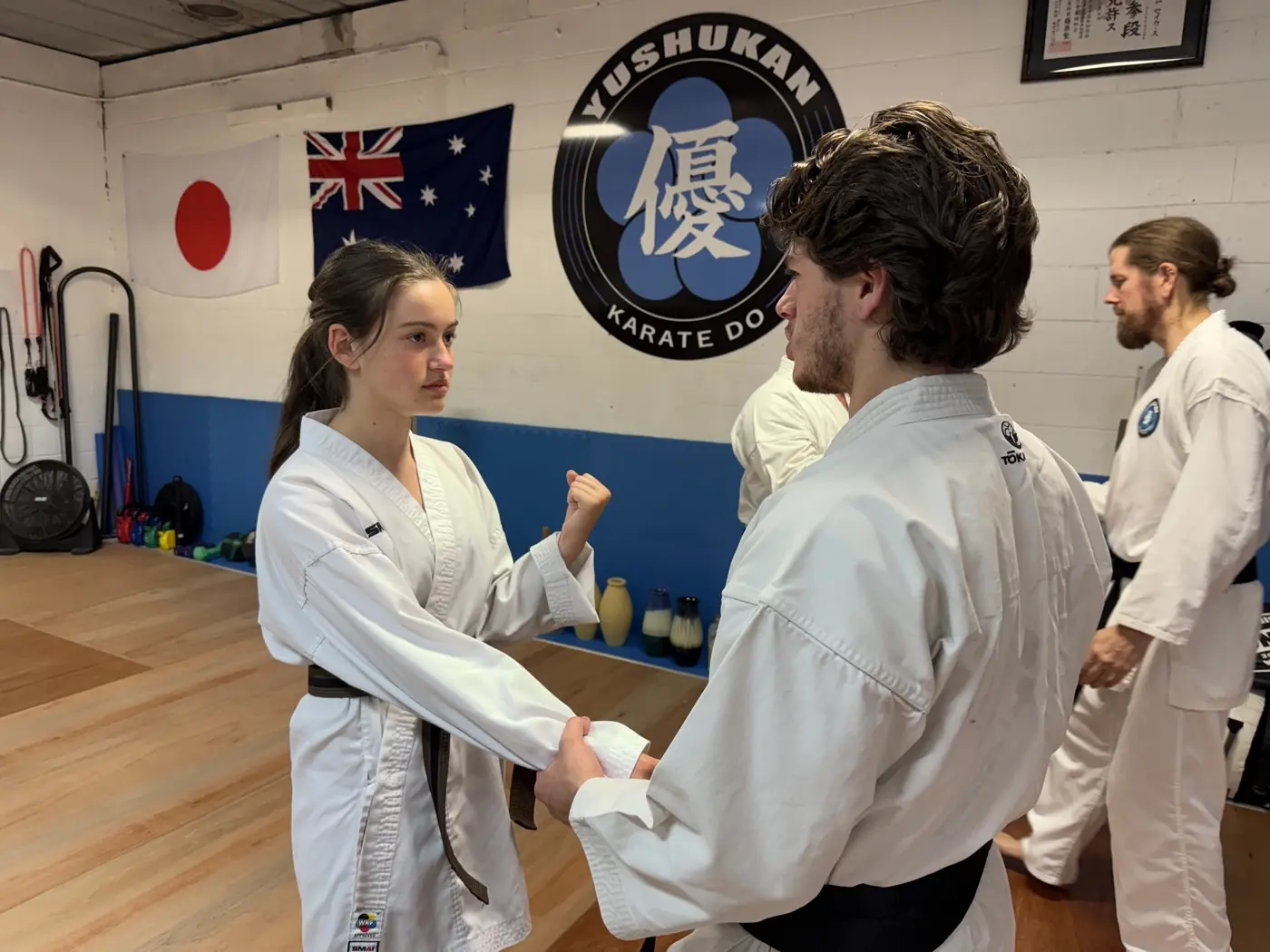
Is karate good for a shy child?
Shy children often thrive in a traditional dojo, because the structure is predictable and the standards do not change based on personality. Here is why.
Read article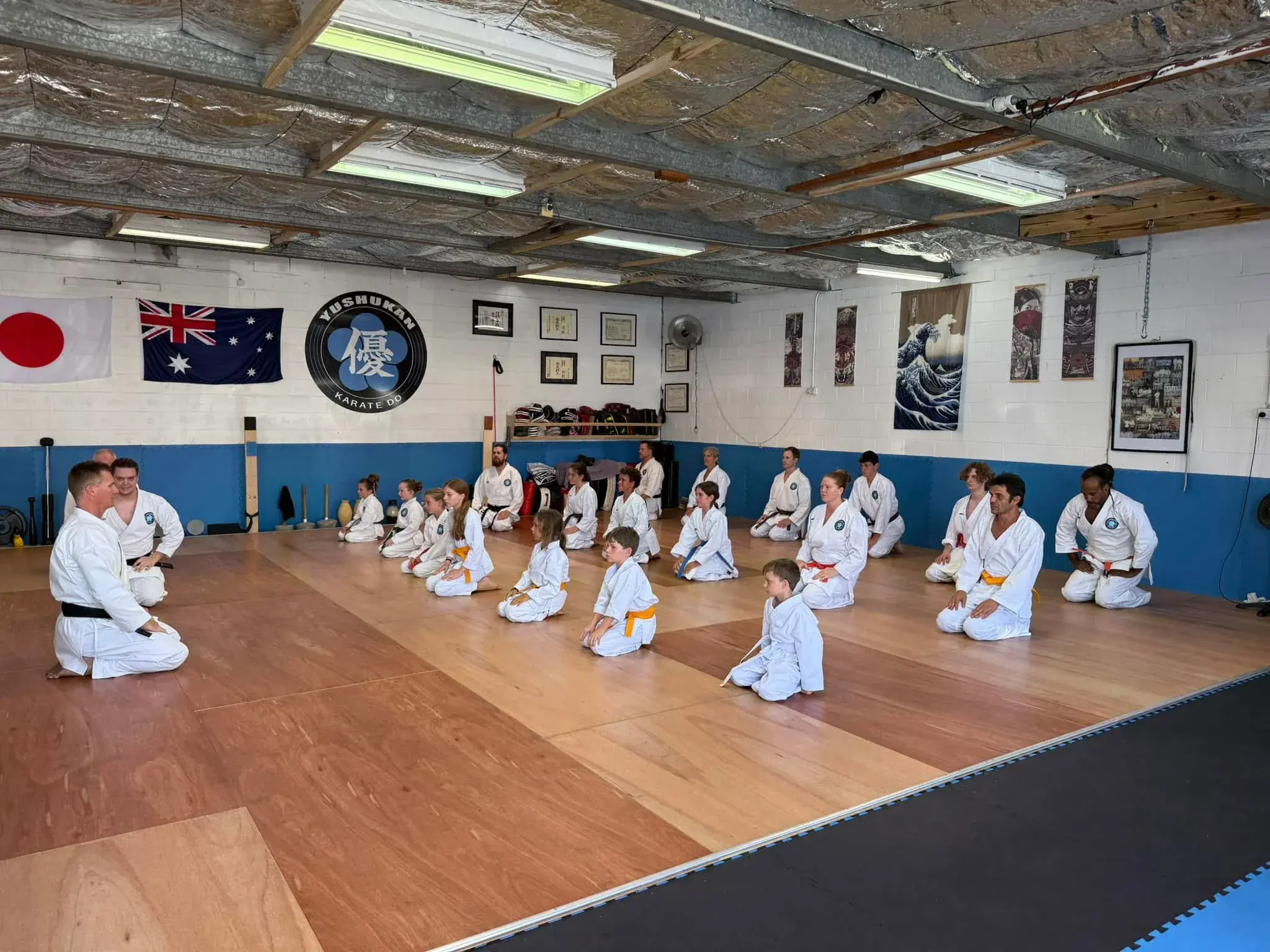
Will karate make my child more aggressive at school?
The most common question parents ask before enrolling a child. The honest answer is the opposite. A well-run dojo builds control, not aggression. Here is how Yushukan handles it.
Read article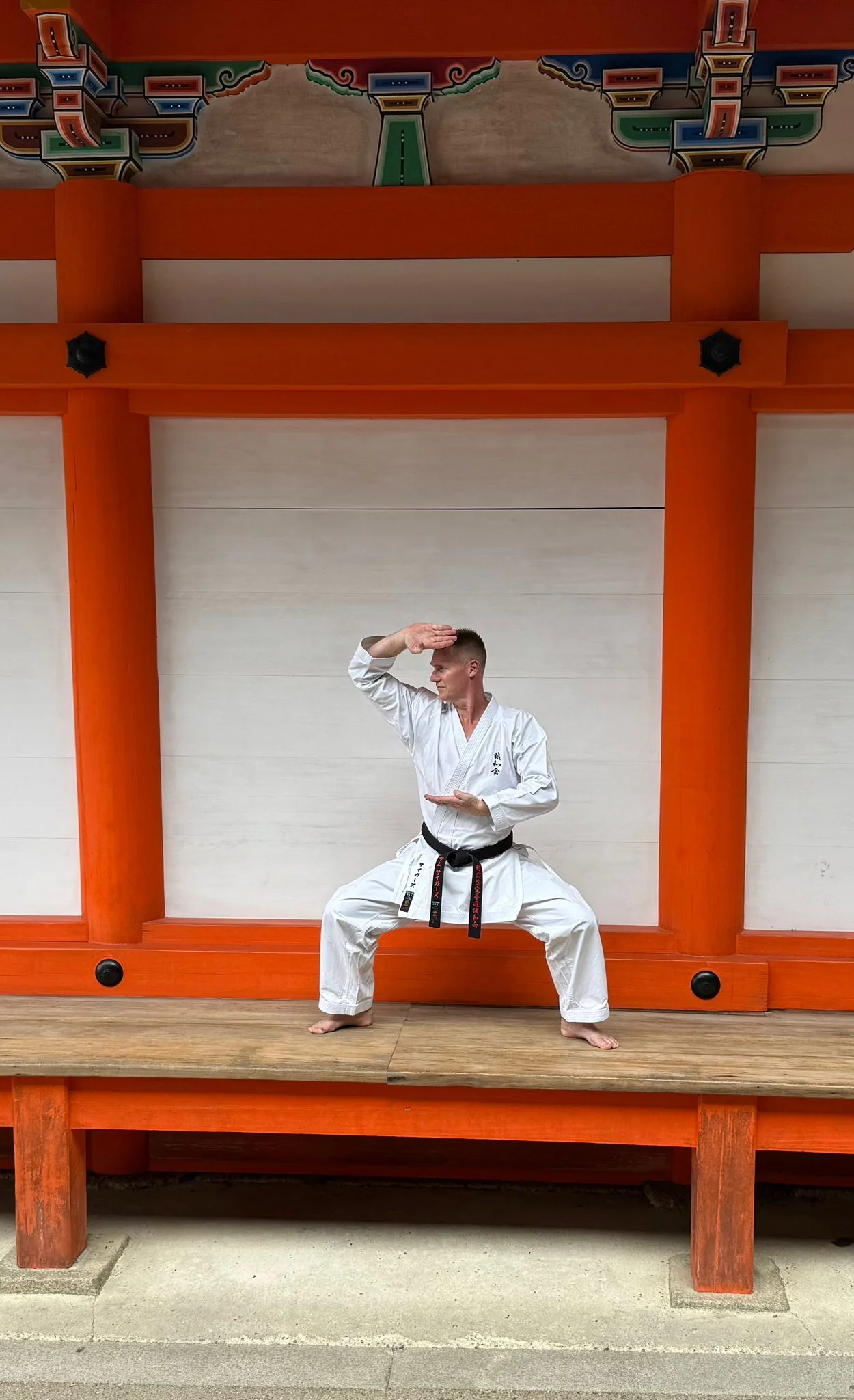
Is 13 too late to start karate?
Not at all. Teens learn fast when training is built for their age, not borrowed from the kids class. Thirteen is a strong place to begin.
Read article Karate for girls: confidence, boundaries and strength without aggression
Girls thrive in a well-structured karate program because it builds real capability, not performance. Here is what to expect at the Tweed Heads South Honbu Dojo.
Read article Is karate good for a child with ADHD or anxiety?
For low-spectrum ADHD and anxiety, often yes. The structure helps because we agree on it openly with parents first. Here is how Yushukan handles it.
Read article Karate vs BJJ for kids: an honest comparison
BJJ excels at ground control. Karate excels standing up, where most real situations start. For most parents the teacher matters more than the style.
Read article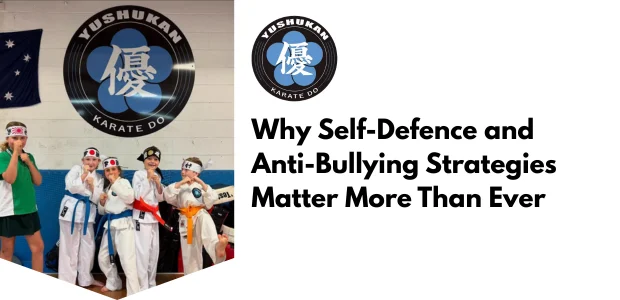
Karate and bullying: what it can and cannot do for your child
Bullying in Australian schools is a real problem. Karate changes how a child carries themselves, which changes how they are read. Here is what Yushukan actually teaches and what we do not promise.
Read article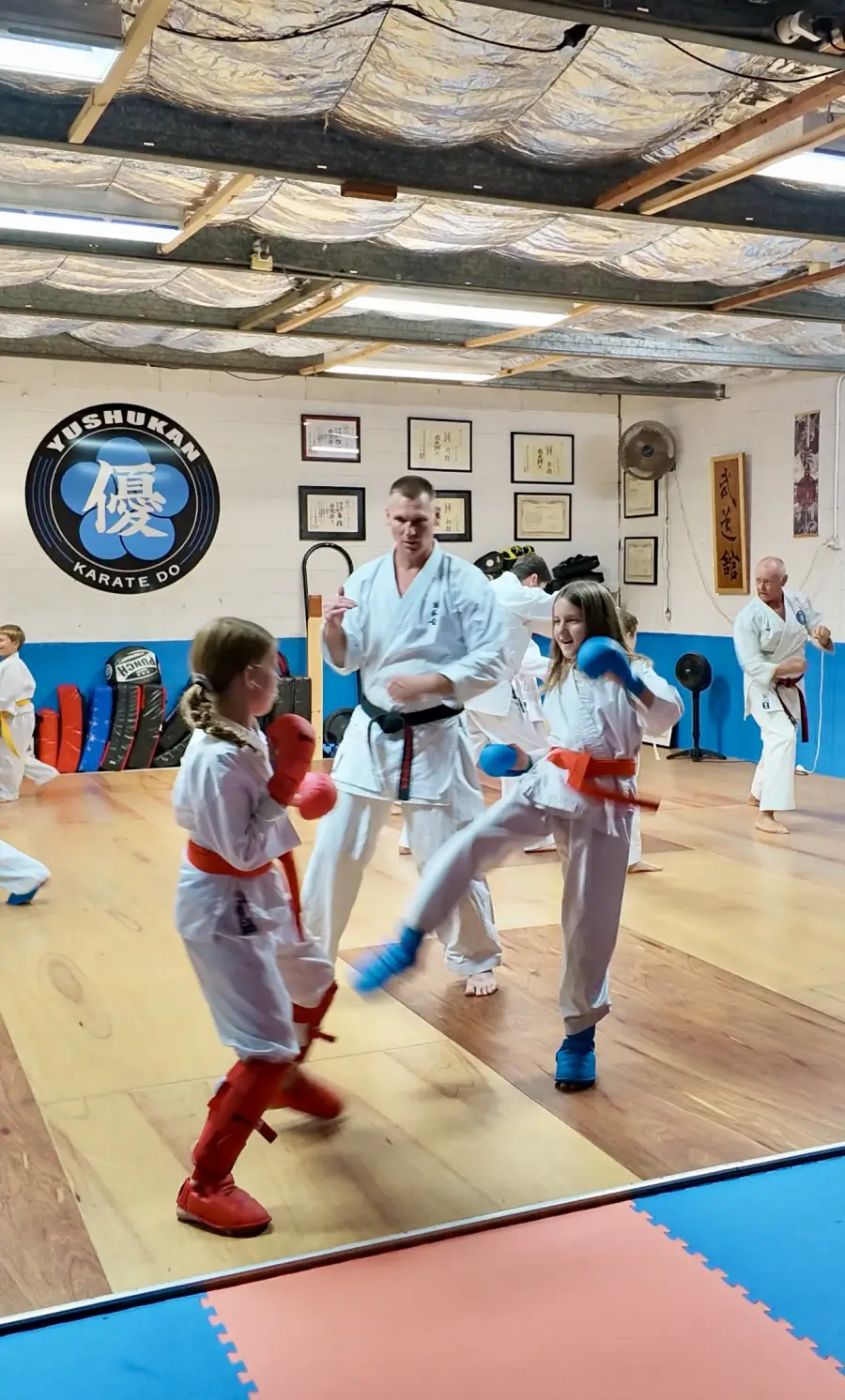
What sparring actually looks like at Yushukan
Sparring at Yushukan is optional, controlled, supervised and matched to your grade. Here is how it actually progresses, and what gear to bring for each age.
Read article
Am I too old to start karate at 40, 50 or 60?
No. Goju Ryu was built for lifetime training. The honest issue is method, not age: train the body you have today, and progress is very possible.
Read article Returning to karate after a long break
The version of you walking back in is who Karate Ready Adult is built for. Mobility-first training, no pretending your body is 25, and an honest Week 4 check.
Read article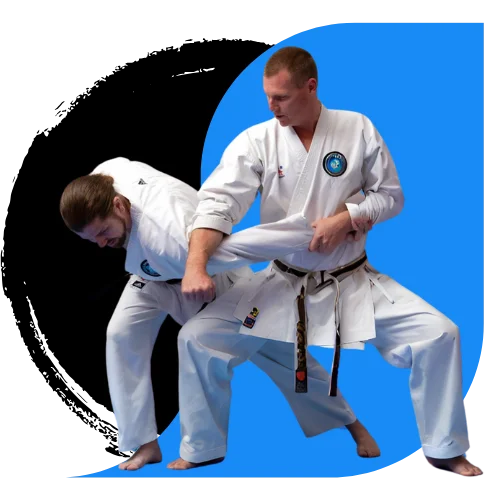
First karate class in Tweed Heads South: what to wear, bring and expect
A practical guide for your first session at the Yushukan Honbu Dojo in Tweed Heads South. What to wear, where to park, what happens in the first ten minutes.
Read article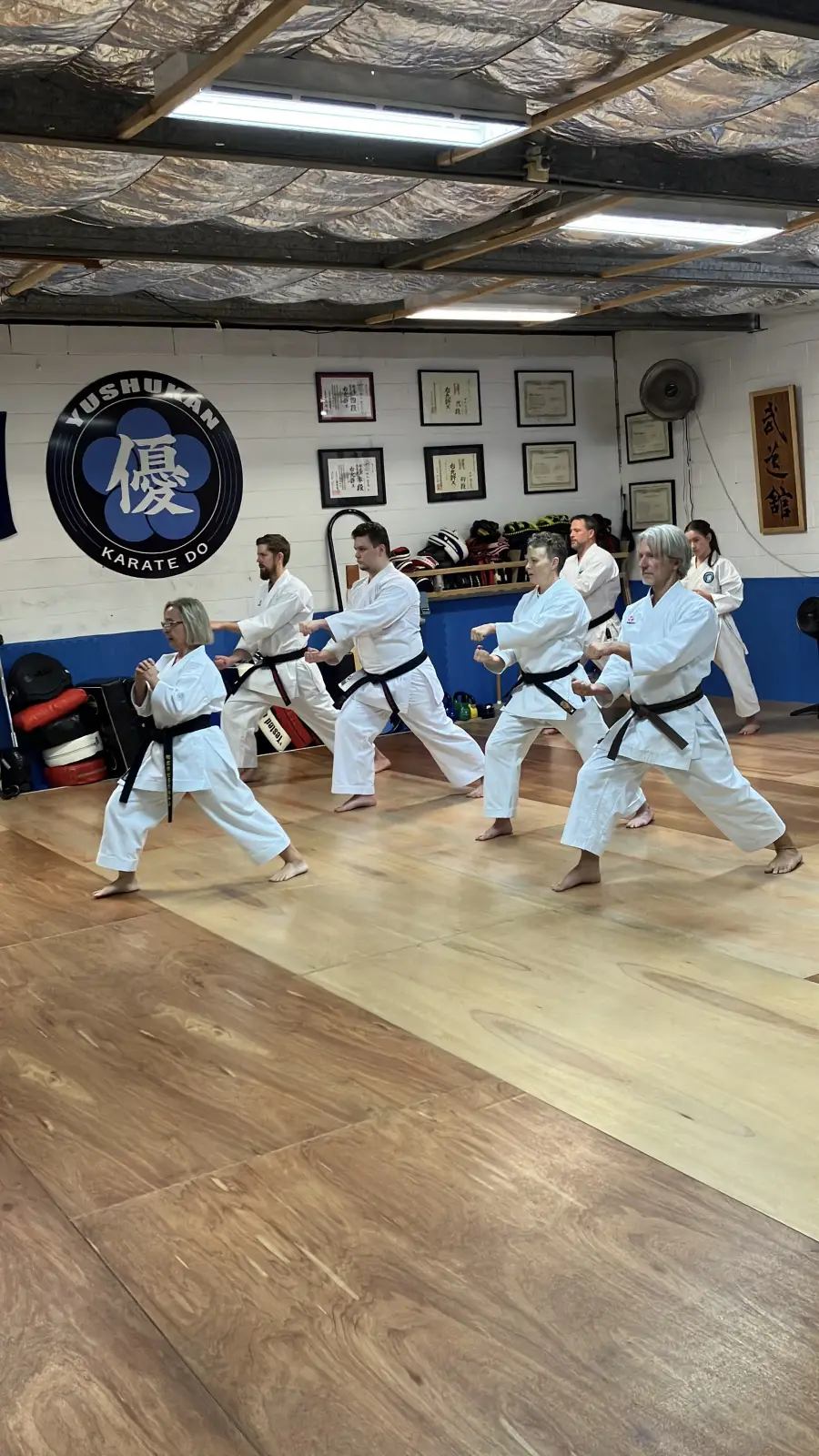
What is Junbi Undo?
Junbi Undo is the traditional Goju Ryu warm-up and mobility sequence. For adult bodies it does most of the work that actually matters on the mat.
Read article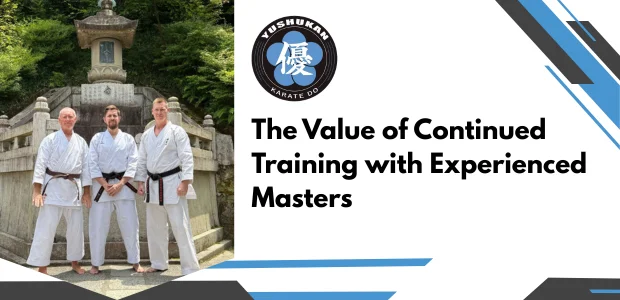
What is Sanchin?
Sanchin means three battles: mind, body and spirit. A foundational Goju Ryu kata that builds posture, breathing and focus that transfers off the mat.
Read article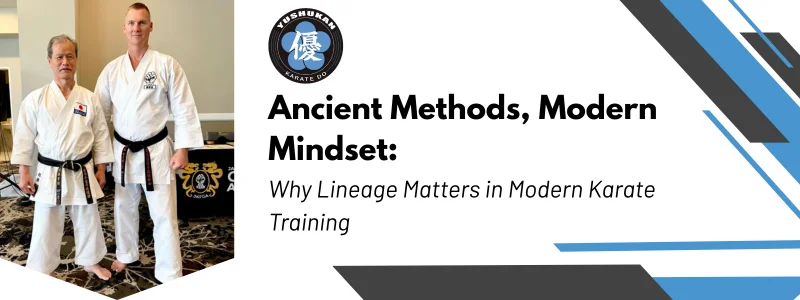
What is Goju Ryu karate?
Goju Ryu means hard-soft. The traditional Okinawan style Yushukan teaches: close-range power, body conditioning, breath work, and real kata study.
Read article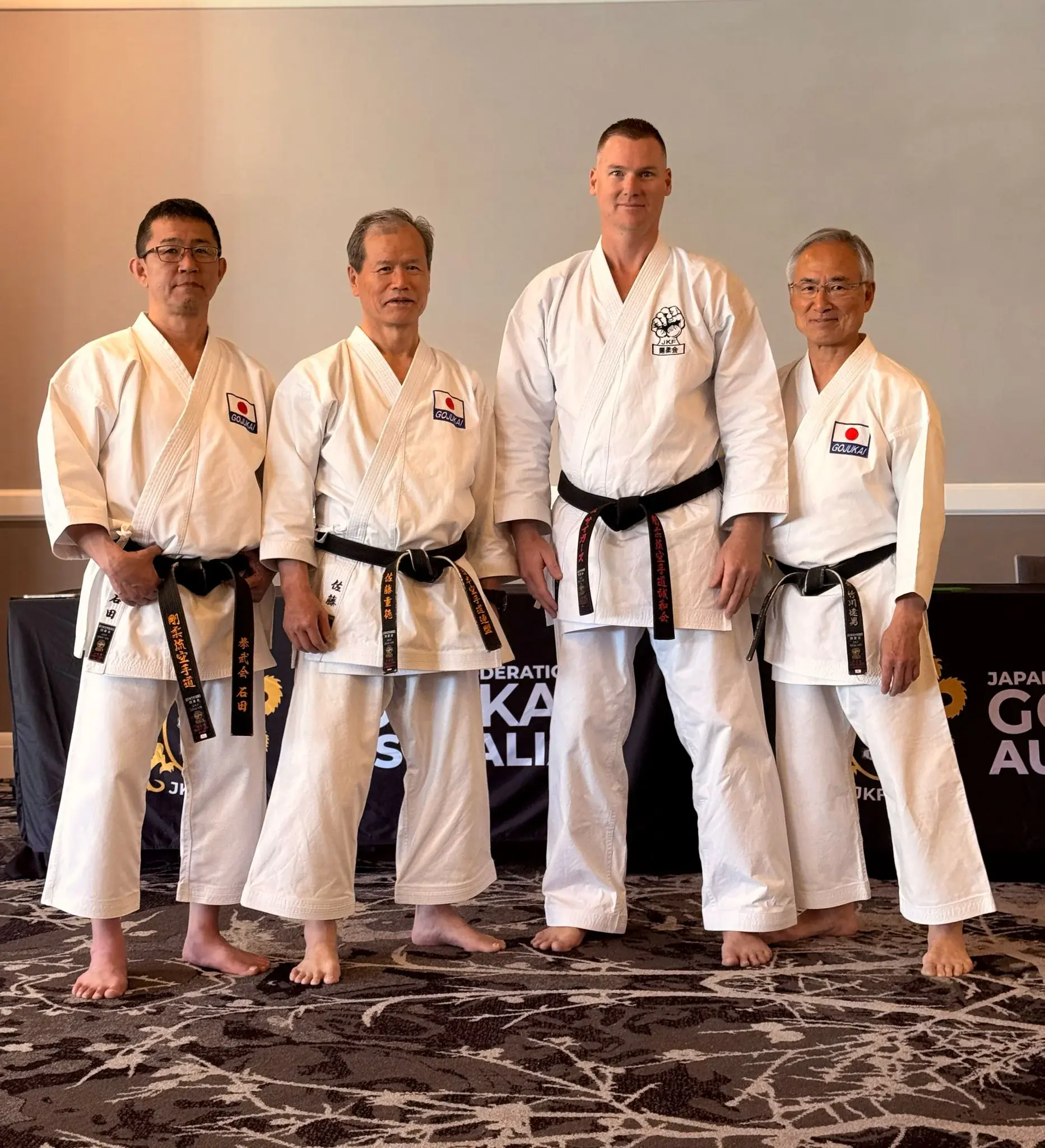
Goju Ryu vs Shotokan vs Kyokushin: how the three differ
All three are legitimate Japanese karate styles. They feel different on the mat. Here is what each emphasises, and why we teach Goju Ryu specifically.
Read article What is kata, and what is bunkai?
Kata is the form. Bunkai is what the form is actually for. In Goju Ryu the two are studied together, so technique stays connected to real use.
Read article What is Sanchin?
Sanchin means three battles: mind, body and spirit. A foundational Goju Ryu kata that builds posture, breathing and focus that transfers off the mat.
Read article What is Junbi Undo?
Junbi Undo is the traditional Goju Ryu warm-up and mobility sequence. For adult bodies it does most of the work that actually matters on the mat.
Read article The value of continued training with experienced masters
Karate is a living art. Because Sensei Sam keeps training under senior masters in Japan and Okinawa, what is taught at Yushukan stays connected to the source.
Read article Ancient methods, modern mindset: why lineage matters
Lineage is not about bragging rights. It is a living chain of knowledge that ensures every technique has been tested, refined and passed down with purpose.
Read article How to spot a McDojo: the 8 red flags
A McDojo is a school built to sell belts, not teach martial arts. Eight red flags Australians use to spot one, and what a real dojo looks like instead.
Read article How long does it take to earn a black belt in karate?
Roughly five years of consistent training at Yushukan. Not eighteen months, not guaranteed, never under twelve. Here is why the honest timeline matters.
Read article What sparring actually looks like at Yushukan
Sparring at Yushukan is optional, controlled, supervised and matched to your grade. Here is how it actually progresses, and what gear to bring for each age.
Read article Active and Creative Kids vouchers for karate at Yushukan (NSW)
Yes, Yushukan accepts the NSW Active and Creative Kids voucher. Two $50 vouchers per child per year, released in January and July. Here is how to use them.
Read article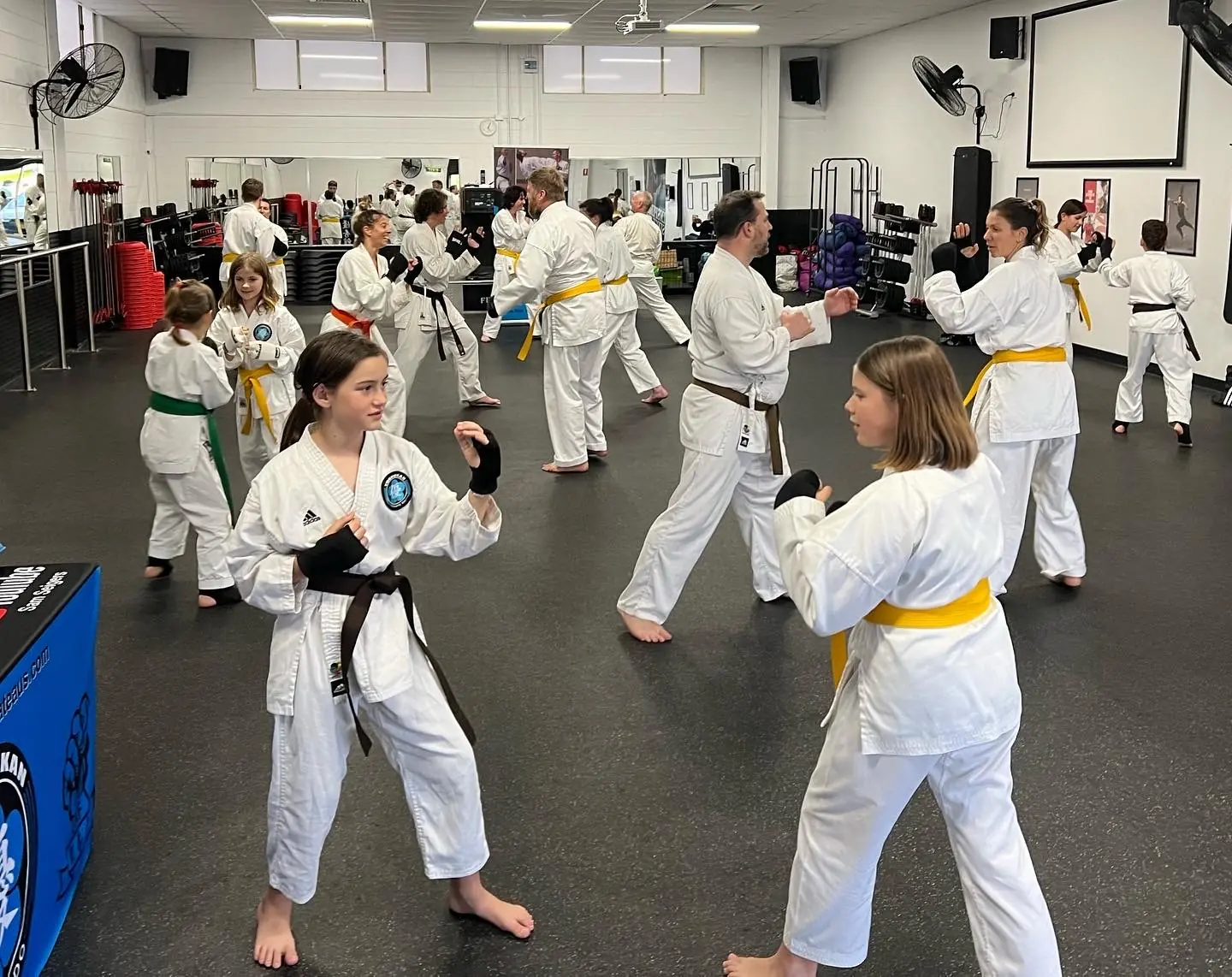
Choose Kids, Teens, or Adult Karate Ready.
Start properly with a structured 3-week pathway. $99 to begin, $90 each for two or more family members. No pressure, no long-term lock-in.
Ask Which Class Is Right