How to spot a McDojo: the 8 red flags
By Sensei Sam Seigers · 4th Dan Seiwakai Goju Ryu · Founder, Yushukan Karate, Tweed Heads South
A McDojo is a school built to sell belts, not teach martial arts. Eight red flags Australians use to spot one, and what a real dojo looks like instead.
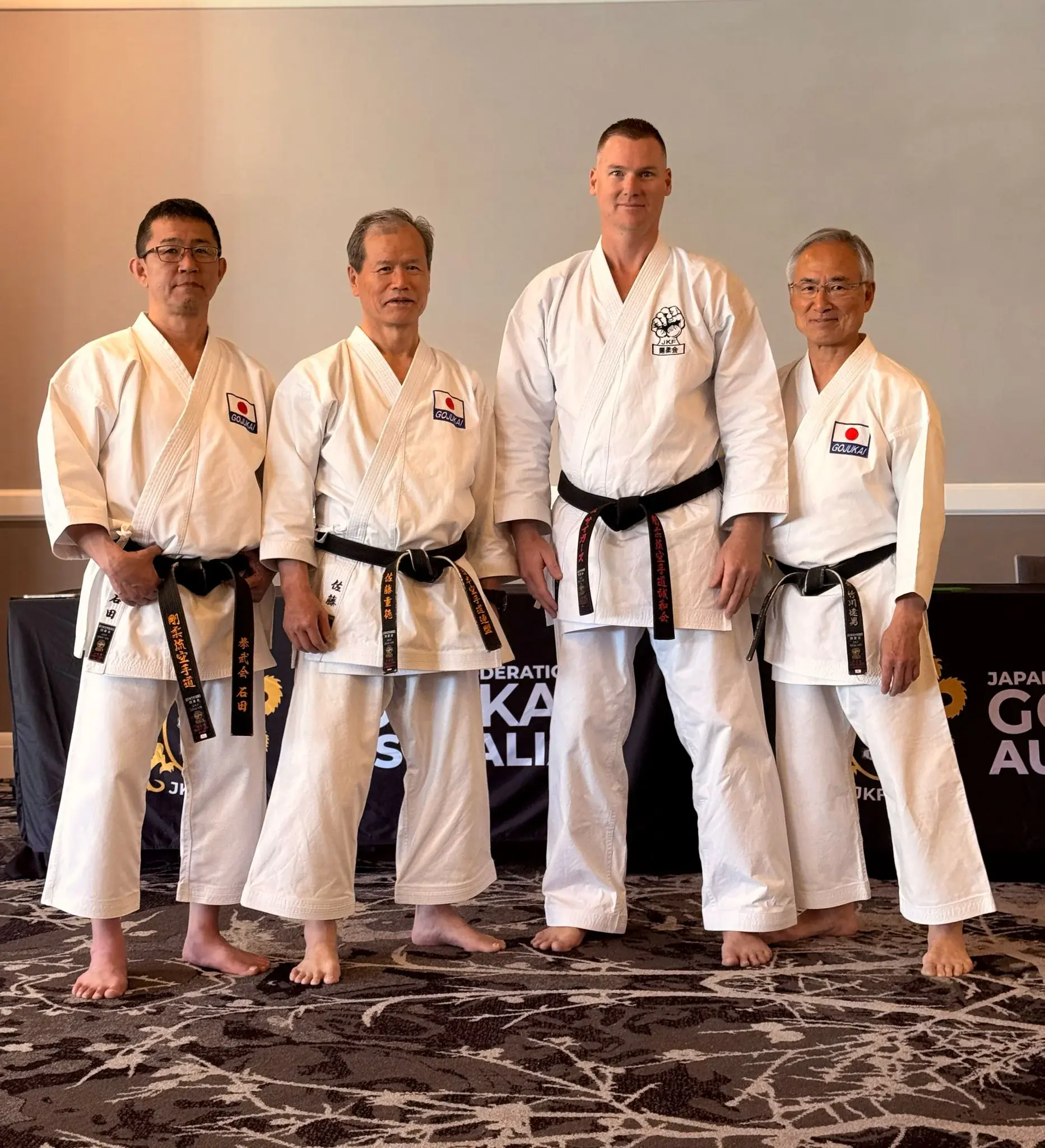
There are dozens of martial arts schools in Australia. Most are legitimate. A meaningful minority are not, which is what the global martial arts community calls a McDojo: a school built to sell belts and contracts rather than teach martial arts. The warning signs are consistent and easy to check before you commit to anything.
Why McDojos exist
Running a legitimate martial arts school is difficult. Teaching takes years to develop. Rent costs money. Marketing costs money. Some school owners respond to this by treating the dojo as a sales funnel: acquire students cheaply, lock them into contracts, sell grading fees and equipment, and minimise the time actually spent on instruction.
The incentive is clear. A school with students on annual contracts, mandatory grading fees every three months, and equipment sold in-house generates reliable revenue regardless of whether any student actually improves. The problem is that students are paying for something they are not receiving.
Red flag 1: no sparring, ever
A martial art that never trains resistance is not testing what it teaches. Kata and partner drills are valuable. Controlled sparring is where those skills are exposed to an unpredictable partner who is trying to stop them. A school that avoids sparring entirely, often justified with vague safety reasons, is usually hiding the fact that the techniques do not hold up under even light pressure.
Sparring does not mean heavy contact. Traditional Goju Ryu uses controlled kumite appropriate to the grade, age and size of the student. Children spar in a supervised environment with instructors setting clear parameters. Adults spar with contact appropriate to their level. The point is to test, not to injure.
Red flag 2: lineage missing or invented
Every traditional martial arts system has a traceable lineage. Grading certificates issued by recognised organisations confirm who granted the rank and through what chain. A school that cannot show who certified the instructor, and who certified the person who certified the instructor, is operating on invented rank.
This is straightforward to check for Goju Ryu. The main organisations, including Seiwakai and JKF Gojukai, have verifiable membership records. Ask to see the instructor grading certificate. If it comes from a school-internal authority with no connection to a recognised body, investigate further.
Red flag 3: black belt promised in 18 months
Real black belt rank in a traditional system requires consistent, multi-year training. In Goju Ryu the minimum is typically four to five years of regular attendance, and promotion is always subject to instructor assessment of actual ability, not just time served. An 18-month black belt program is either a very different art from traditional karate, or it is selling a belt.
The value of a genuine black belt is in what the student can do when they earn it. A belt issued on a schedule has no meaning and no value outside the school that issued it.
Red flag 4: young children with black belts
A nine-year-old black belt is not physically possible in a legitimate traditional system. Not because children cannot train hard, but because the technical and psychological maturity a genuine black belt standard requires takes years of development that age cannot compress. When belts are issued to children as a retention mechanism to keep parents paying, the standard has been replaced by a business model.
At Yushukan, black belts are not awarded to students under twelve. That minimum exists because it reflects the actual standard, and it is not negotiable.
Red flag 5: long mandatory contracts upfront
A school that is confident in its teaching does not need to lock students in before they have experienced it. Long mandatory contracts, often twelve or twenty-four months, exist to protect the school from the student who discovers the quality does not match the sales pitch.
Ask about the contract structure before you visit. A legitimate school will tell you the fees, the term structure, and the exit terms clearly and upfront. If the school uses any version of "we will explain when you come in," that is your answer.
Red flag 6: mandatory equipment sold by the school
Equipment mark-up is a standard supplementary revenue stream in the McDojo model. Students are told they must purchase gloves, shin guards, uniform, and sparring gear exclusively from the school, often at prices well above market. Legitimate schools may stock equipment for convenience but will not make school-specific branded kit mandatory.
Red flag 7: prices hidden until you are in the room
Any school that will not publish its fees online or quote them clearly by phone is hiding something. Transparent pricing is one of the cheapest trust signals a legitimate school can offer. Schools that use "come in and we will go through it" are optimising for a sales environment where social pressure is easier to apply.
Yushukan publishes the full fee structure on the timetable and fees page. No conversation required.
Red flag 8: instructors who cannot demonstrate what they teach
An instructor who cannot show the technique they are teaching has either learned it only theoretically or has deteriorated to the point where the skill is no longer accessible. Ask whether the instructor trains themselves, who they train under, and when they last attended a seminar or graded. Active instructors who continue to train are the norm in traditional martial arts.
Five questions to ask any school
Before you sign anything, you are entitled to clear answers.
- Show me the instructor grading certificates and the lineage. A real school can do this immediately. Certificates from self-issued bodies or unrecognised organisations are worth investigating.
- How long does a black belt actually take, and what must a student demonstrate to earn it? If the answer is under three years, or framed in terms of attendance rather than standard, that is your answer.
- Is the price published before I visit? What are the exit terms if the school is not the right fit?
- How do you handle a struggling student? Patient correction and appropriate adjustment mean the instructor can actually teach.
- Can I speak with the instructor directly, before booking? A school that routes all contact through admin is optimising for sales, not teaching.
What a legitimate school looks like
A legitimate school has a verifiable instructor lineage, published fees, no long-term lock-in contracts, and an instructor who trains themselves. The instructor can answer technical questions without a script. The students can demonstrate what they have been taught. The grading certificates connect to a recognised body.
Transparency is not difficult. It just requires a school that has nothing to hide.
Yushukan on the checklist
We publish the full version of this checklist with our answers on the how to choose a karate dojo page. That page includes the verifiable lineage from Chojun Miyagi through to Sensei Sam, the full fee structure, and the grading standards. Run it against any school you consider, including ours.
Quick answers
- What is a McDojo?
- A martial arts school built primarily to generate revenue through belt sales, contracts and equipment, rather than to teach genuine martial arts. The term comes from the fast-food analogy: the product looks like the real thing but does not deliver the substance.
- How do I check a karate instructor's lineage in Australia?
- Ask to see the grading certificate and the issuing body. Legitimate Goju Ryu lineages run through recognised organisations such as Gojuryu Seiwakai Karate-Do International, JKF Gojukai, or IOGKF. Search the organisation name and check whether the instructor or school appears in member directories.
- Is a one-year karate contract normal?
- No. Most legitimate traditional dojos use term-by-term or monthly arrangements. Long contracts with locked-in grading fees are a business model, not a teaching model.
- What is a realistic black belt timeline in Goju Ryu?
- In a legitimate traditional system, four to seven years of consistent training. At Yushukan, roughly five years for an adult attending regularly, subject to assessment of actual standard at each grading.
Written by Sensei Sam Seigers, 4th Dan Seiwakai Goju Ryu and 3rd Dan All Japan Karate Federation Gojukai. Sam founded Yushukan Karate in 2020 at the Tweed Heads South Honbu Dojo (Unit 3/58 Machinery Drive, Tweed Heads South NSW 2486). He continues to travel to Japan and Okinawa to train under Seiichi Fujiwara Hanshi and other senior teachers.
Yushukan Karate teaches traditional Goju Ryu to kids 7+, teens, and adults. Beginners start with Karate Ready, a structured 3-week pathway.