Is karate good for a shy child?
By Sensei Sam Seigers · 4th Dan Seiwakai Goju Ryu · Founder, Yushukan Karate, Tweed Heads South
Shy children often thrive in a traditional dojo, because the structure is predictable and the standards do not change based on personality. Here is why.
At Yushukan Karate in Tweed Heads South this is one of the most common questions parents ask. The honest answer is yes, often more than for confident kids. Shy children tend to thrive in a traditional dojo precisely because it is structured and predictable, and because the standards do not change based on personality.
Why structure helps shy children
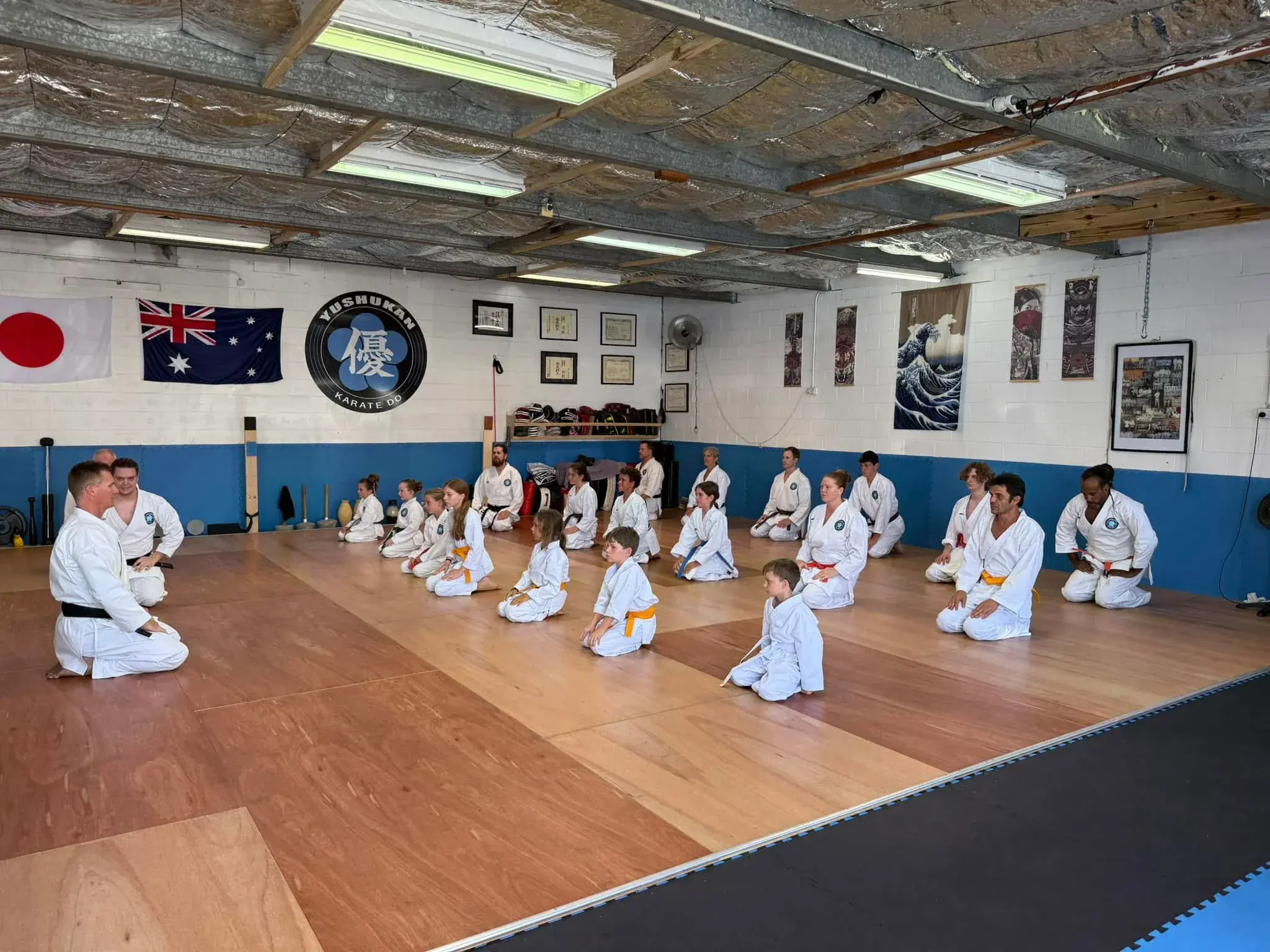
Shy children often struggle in environments where the expectations shift based on confidence or social skill. The dojo removes that variable. The standards are clear. The order of the class is consistent. Bowing in, warm-up, basics, technique, kata, partner work, bowing out. Knowing what is coming next reduces the social load a shy child carries during a typical day.
The instructor sets the pace, not the loudest child in the room. That alone changes the experience. A child who is overwhelmed in a noisy ball-sports environment can be calm and focused in the dojo, because the room is not asking them to be socially performative to be valued.
How we handle it at Yushukan
We do not call shy children out or put them on the spot. We do not pair them with stronger partners in their first week. We let them participate at the pace they are comfortable with for the first couple of weeks, then gently raise the standard.
Praise is given for real things: better posture, better technique, sticking with a hard moment, helping a partner. Empty praise does not build confidence in a shy child because the child knows it is empty. Real recognition of real progress does. This is one of the points where traditional karate differs from a participation-trophy style of activity. Confidence here is built on capability.
What parents typically see at home
Most parents tell us their shy child becomes calmer and more confident at home faster than they expected. The order is usually predictable. First, posture changes. Second, eye contact lengthens. Third, they start speaking up about things they care about. Fourth, they start asserting limits gently with siblings or peers.
This change is also visible at school. Bullying patterns target hesitation and avoidance. A child who walks into a room with an upright posture and a steady gaze is read as harder to bully, even before any words are spoken. We see this often enough that we treat it as part of the design of the program, not an accident of it.
Is the dojo too intense for a shy child?
No. The class is structured but it is not loud or aggressive. Discipline at Yushukan is calm, not stern. Instructors speak normally, and the kids speak normally back. Bowing, the line-up, and the basic etiquette of the dojo provide a framework that shy children settle into quickly because it tells them exactly how to belong without having to figure it out socially.
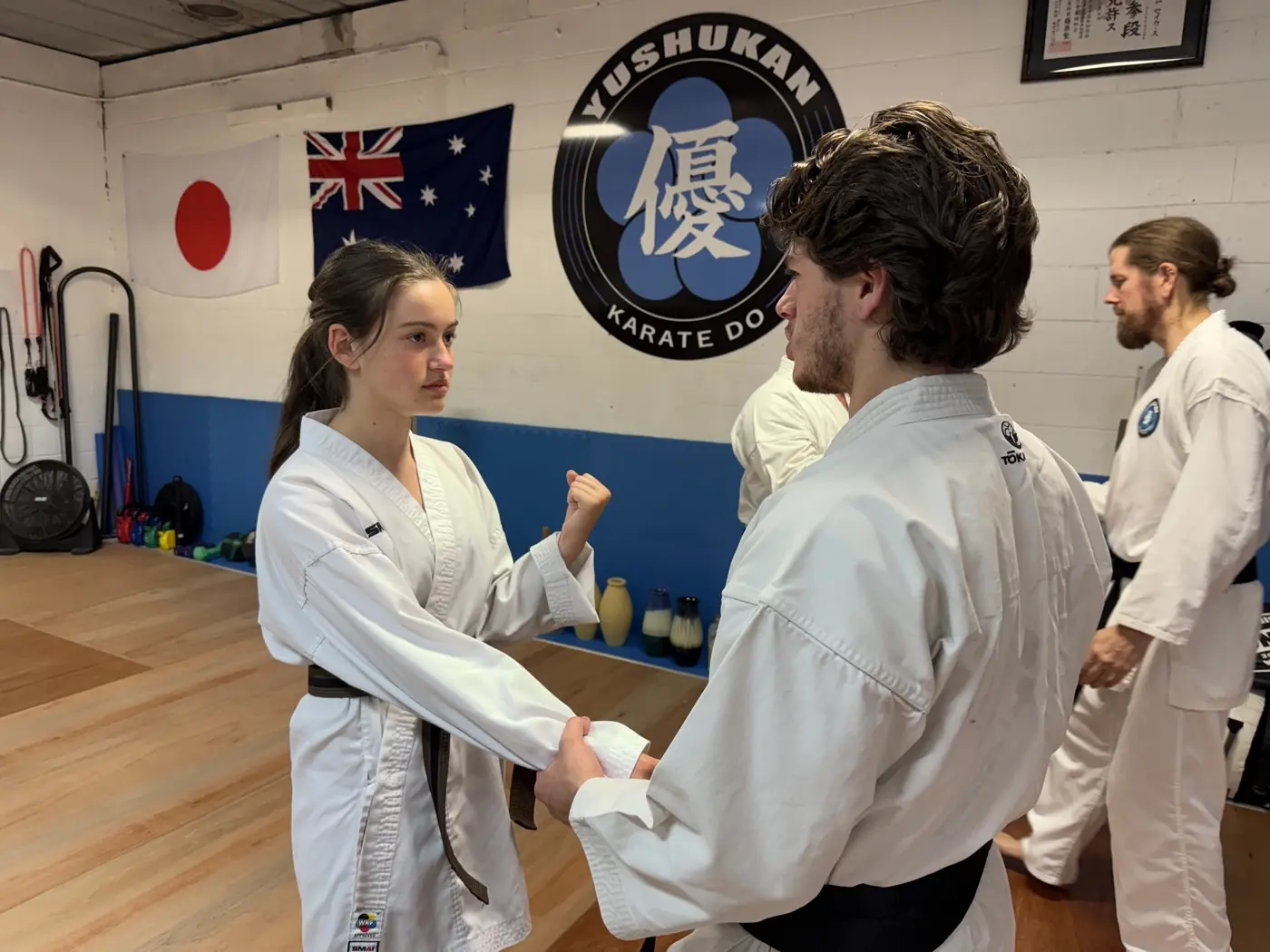
Hard sparring is not part of the kids program. Partner work is age-appropriate and supervised, and the children rotate so no one has to deal with a stronger partner before they are ready. If at any time something is too much for your child, they tell us, and we adjust.
A low-pressure way to find out
Karate Ready Kids is a structured three-week pathway, $99 for a single starter, $90 each for two or more family members. Seven in-dojo sessions plus online support, then a Week 4 readiness check. It is a low-pressure way to find out whether the dojo suits your child.
If by Week 4 it is not the right fit, you shake hands and they walk away with the start they got. If it is the right fit, you choose a term and continue. Either way you find out properly. Read will karate make my child aggressive if behaviour at home is the other side of the worry. Or book Kids Karate Ready 7 to 12 for the next intake.
Quick answers
- Is karate good for a shy child?
- Yes, often more so than for confident kids. Shy children thrive in a traditional dojo because the structure is predictable, the standards are consistent, and the instructor sets the pace rather than the loudest child in the room.
- Will my shy child be called out in front of the class?
- No. At Yushukan shy students are not put on the spot or paired with stronger partners in their first weeks. They are given time to settle into the structure before the standard is raised.
- How long before a shy child shows confidence?
- Most parents notice posture changes within the first two or three sessions, and a change in how the child speaks up at home within six weeks. Individual progress varies, but the pattern is consistent.
- Is the dojo environment too intense for a sensitive child?
- No. The class is structured but not loud or aggressive. Discipline at Yushukan is calm and consistent. Shy children usually find the predictability of the dojo reassuring rather than overwhelming.
Written by Sensei Sam Seigers, 4th Dan Seiwakai Goju Ryu and 3rd Dan All Japan Karate Federation Gojukai. Sam founded Yushukan Karate in 2020 at the Tweed Heads South Honbu Dojo (Unit 3/58 Machinery Drive, Tweed Heads South NSW 2486). He continues to travel to Japan and Okinawa to train under Seiichi Fujiwara Hanshi and other senior teachers.
Yushukan Karate teaches traditional Goju Ryu to kids 7+, teens, and adults. Beginners start with Karate Ready, a structured 3-week pathway.