What motivates the motivator?
By Sensei Sam Seigers · 4th Dan Seiwakai Goju Ryu · Founder, Yushukan Karate, Tweed Heads South
A Sensei reflects on what keeps an instructor showing up: a love of the art, and honest thoughts on aggression, self-defence and choosing a martial art.
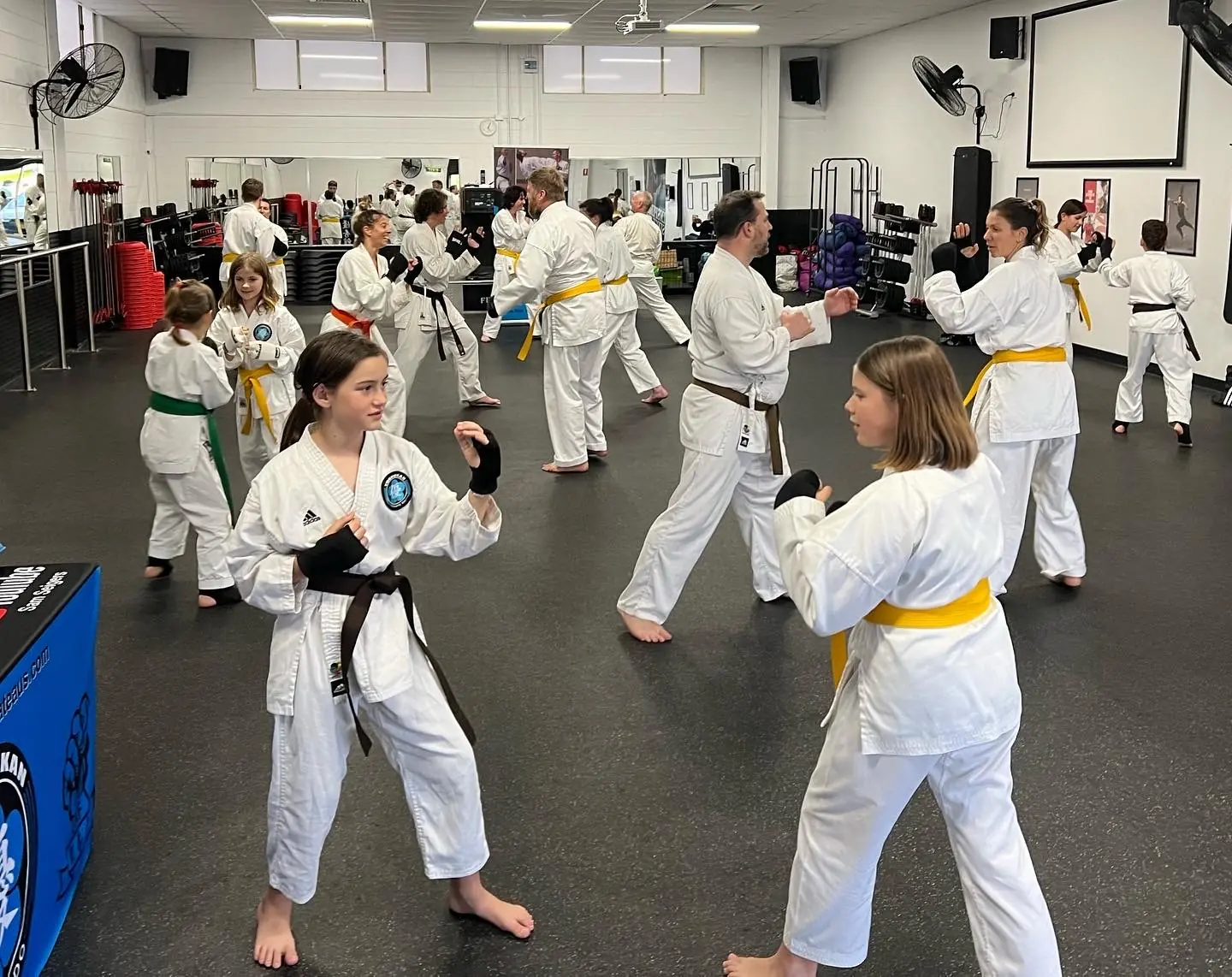
People sometimes look at their Sensei as another kind of human, one who never seems to have problems or lose motivation. The truth is that Sensei are human too. We have ups and downs like everyone. So what makes a Sensei keep getting up in front of the class week after week to inspire others?
In my experience it is a genuine love of the art and the way. Karate is not something we do, it is something we are. It is the place we go to think, regroup and recharge. Whenever we are in the dojo we feel great, whether the day was good or bad, and that energy passes on to everyone who walks in.
Will karate make my child aggressive?
Many parents ask this. It depends entirely on the instructor. When children start, they are keen to use their new skills, which is normal. The answer is to explain clearly, early, where and when those skills can and cannot be used, and the consequences of using them in the wrong place. Over time the disciplined class environment gives them a controlled outlet. They learn to use their skills in the dojo, not at school or home, and they become calmer and lose the need to be aggressive.
Does karate work in the street?
Context is everything. If you mean bouncing around scoring points and waiting for a referee, then no, that aspect is not effective for real self-defence. But if you mean trained responses and the applications of kata, tested over hundreds of years against an attacker who means harm, then karate works. Next time someone says it does not, ask them what they mean and what type of karate they practise.
Why home training matters
If you are not training at home, you are going backward. Most people train once or twice a week. For them, home training is essential. Karate is far deeper than it looks, and skill comes from hours of correct repetition. Home training keeps ideas fresh and builds retention, because repetition is the mother of skill. The caveat is that the repetitions must be correct, which is why dojo training under a qualified instructor cannot be replaced.
Stressed? Try karate
Stress is a major cause of health problems today. Karate is a great way to reduce it: physical exertion improves blood flow, deep breathing has a calming effect, and the focus required gets you out of your own head so you cannot dwell on what is stressing you out.
Karate, MMA, or another art?
Which martial art is best has been debated since the dawn of the arts. The honest answer is that it depends on what you want. If you want to be a career fighter, look at MMA, boxing, Muay Thai and the competition circuits. If you want practical self-defence, choose an art trained that way. If you want a family activity that keeps you fit and spends time together, that is different again. Be specific about your goal, research the schools near you, meet the instructors, and try real training, not a single class, to see if it is for you.
Everyone is different. Enjoy the journey and find what is best for you.
How the dojo stays the same when the day is hard
One of the things that keeps an instructor coming back is the constancy of the dojo itself. The world outside changes. Work gets harder, family gets complicated, motivation rises and drops with the season. The dojo does not. The bow-in is the same. The warm-up is the same. The standard is the same. That sameness is not rigidity. It is reliability. And reliability, when the rest of life is not reliable, is one of the most useful things a training practice can offer.
Sensei feel this too. The class routine is not just for students. Walking onto the mat is a reset for the person in front of it as much as the person following. The day before does not matter there. The next week does not matter there. The work matters, and the work is in front of you.
What I see in students that keeps me here
The students keep the instructor going more than most instructors admit. Not the advanced students, though their progress is satisfying in its own way. The students who keep me here are the ones who walked in uncertain and are still here. The adult who had not exercised in fifteen years and came back the following week. The shy child who by term three was correcting their own technique without being asked. The teenager who thought karate was not for them and now trains harder than anyone in the class.
Those changes do not happen because the instructor is exceptional. They happen because karate is a structure that works when the student is ready to work in it. Watching that match happen is the job, and it does not get old.
The part of karate that surprises most adults
Most adults expect the physical challenge and they are ready for it. What they do not expect is the quiet part. The ten minutes at the end of a session when the breathing settles and the room is still before the bow-out. The moment a kata runs cleanly for the first time and they understand, without being told, that something has changed. The realisation several weeks in that the posture they are working on in the dojo is the posture they are carrying at work.
Karate has depth that fitness training does not. That is why a Sensei who loves the art keeps teaching it. The depth is not in the techniques alone. It is in the art's ability to keep revealing something new about the person doing it.
Written by Sensei Sam Seigers, 4th Dan Seiwakai Goju Ryu and 3rd Dan All Japan Karate Federation Gojukai. Sam founded Yushukan Karate in 2020 at the Tweed Heads South Honbu Dojo (Unit 3/58 Machinery Drive, Tweed Heads South NSW 2486). He continues to travel to Japan and Okinawa to train under Seiichi Fujiwara Hanshi and other senior teachers.
Yushukan Karate teaches traditional Goju Ryu to kids 7+, teens, and adults. Beginners start with Karate Ready, a structured 3-week pathway.