What sparring actually looks like at Yushukan
By Sensei Sam Seigers · 4th Dan Seiwakai Goju Ryu · Founder, Yushukan Karate, Tweed Heads South
Sparring at Yushukan is optional, controlled, supervised and matched to your grade. Here is how it actually progresses, and what gear to bring for each age.
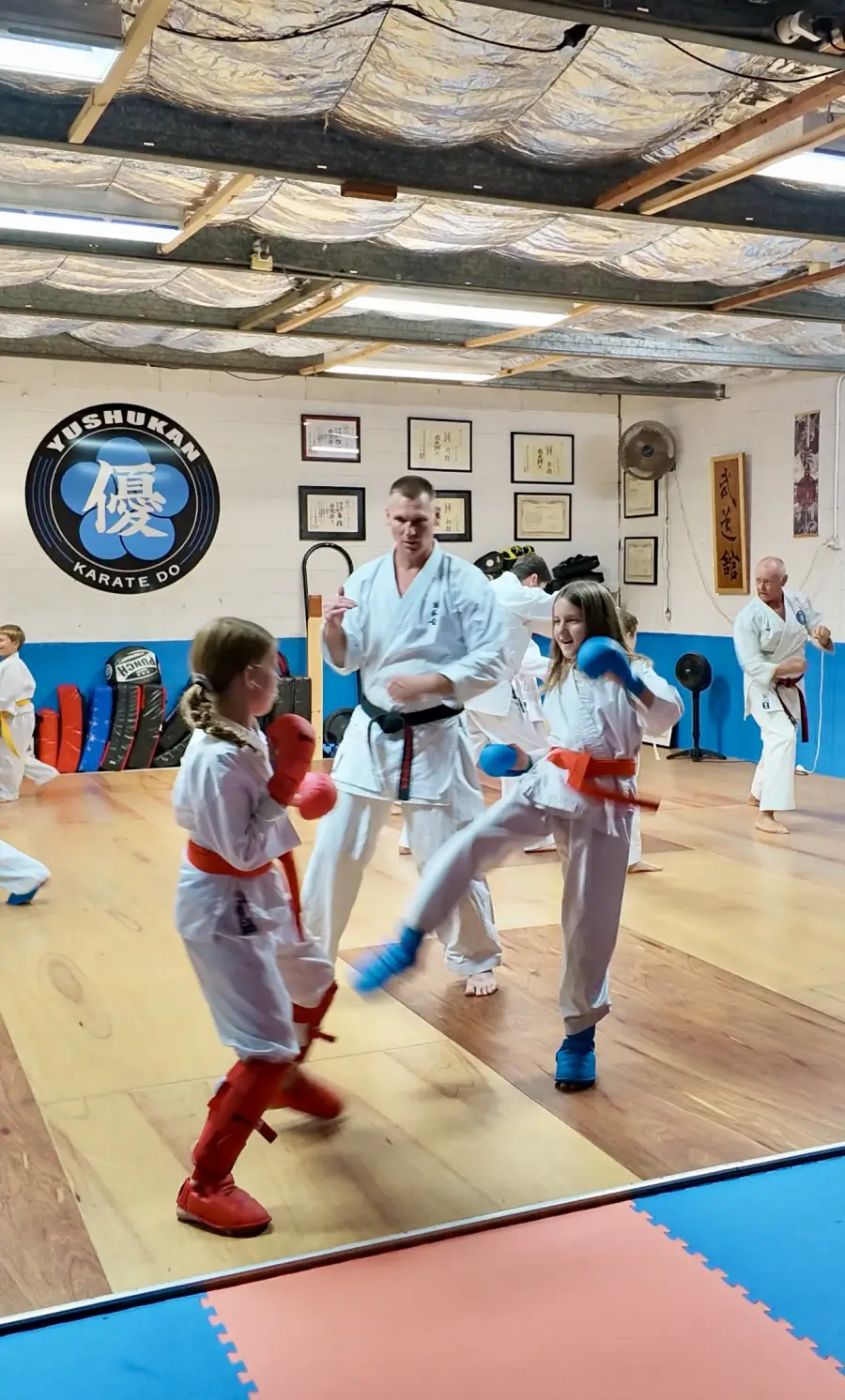
Sparring is one of the most misunderstood parts of karate. The mental picture most people arrive with is harder, faster and more chaotic than what actually happens in a serious dojo. At Yushukan, sparring is optional, controlled, supervised, and matched to the grade of the people doing it. No one is thrown in cold.
It is optional
You can train at Yushukan for a long time without doing free sparring at all, and still grade. Beginners are never used as a sparring introduction. If you would rather train at a tier and at a pace that excludes free sparring, talk to Sensei Sam and we will plan around it.
When sparring does happen, this is how
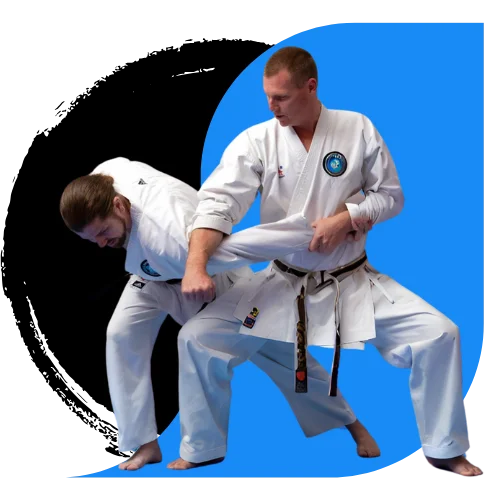
A student who wants to spar progresses through controlled steps first: yakusoku kumite (pre-arranged sparring), partner drills, pad and bag work, and only then jiyu kumite (free sparring) at an intensity matched to the partners involved. The instructor sets the level and the partners. Junior grades do not train at senior-grade intensity, and senior grades do not put junior grades under unfair pressure. That is the whole point of being a graded dojo.
What gear to bring
The exact protective set depends on age and what you are training that day.
- Kids and teens: WKF-approved gloves, shin and instep protectors, plus a mouthguard and groin guard. For tournaments, WKF-approved head gear is added, and chest guards for female competitors.
- Adults: either the WKF-approved set, or MMA-style or Muay Thai gloves and shin guards, plus a mouthguard and groin guard.
- Mouthguards and groin guards are technically optional. If an injury happens in one of those areas without them, insurance cover is waived, so we strongly recommend you wear them.
You can buy everything through the club at the best available price, but it is not mandatory. If you already own gear that meets the standard, bring it.
How it fits into a class
A typical session keeps to a consistent shape: bow-in, Junbi Undo warm-up, kihon (basics), ido geiko (moving basics), partner or pad work, and a bow-out. When the class includes sparring, it sits inside that structure with the same control. It is karate training, not a fight night.
Why it matters
Sparring done well is what makes karate honest. You learn what works for you, what does not, and how you respond under a little pressure. Sparring done badly is what gives karate its worst reputation. The difference is grading the intensity, choosing the partners deliberately, and making it a choice rather than an obligation.
The full kumite guidelines
For the complete breakdown of sparring rules, banned techniques, grade-level permissions, contact levels and the three forms of kumite practice, see the kumite guidelines.
Start with the right pathway
If sparring is what brought you here, the right place to begin is still the 3-week starter program. See Karate Ready, the adult page for how sparring fits into adult training, or how to choose a karate dojo for the wider trust picture.
Quick answers
- Do beginners have to spar at Yushukan?
- No. Sparring is optional at Yushukan. Beginners are never pushed into free sparring. You can train and grade for a long time before that step, and you choose when to take it.
- What protective gear do kids need for sparring?
- WKF-approved gloves, shin and instep protectors, mouthguard and groin guard. For tournaments, WKF-approved head gear and a chest guard for female competitors. All gear is available through the club.
- Is there hard sparring in the kids class?
- No. Contact in the kids class is controlled and grade-matched. Partner work is cooperative in the early months. Hard knockdown sparring is not part of the Yushukan program at any age.
- What is the difference between yakusoku kumite and jiyu kumite?
- Yakusoku kumite is pre-arranged sparring: both partners know the attack and defence. Jiyu kumite is free sparring with no prearranged pattern. Students progress through yakusoku before moving to jiyu.
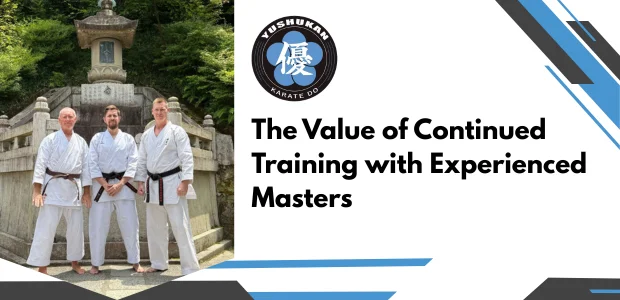
Written by Sensei Sam Seigers, 4th Dan Seiwakai Goju Ryu and 3rd Dan All Japan Karate Federation Gojukai. Sam founded Yushukan Karate in 2020 at the Tweed Heads South Honbu Dojo (Unit 3/58 Machinery Drive, Tweed Heads South NSW 2486). He continues to travel to Japan and Okinawa to train under Seiichi Fujiwara Hanshi and other senior teachers.
Yushukan Karate teaches traditional Goju Ryu to kids 7+, teens, and adults. Beginners start with Karate Ready, a structured 3-week pathway.